



Latest Thoughts
Explore My Reflections
Following the contemplative rhythm of Lectio Divina
Moving from Attentive Reading (Lectio)
To Reflection (Meditatio)
To Prayerful Response (Oratio)
And finally into Silent Resting in God (Contemplatio)
Grappling With Divinity invites a slow unfolding of Scripture, Spiritual Wisdom, and Lived Experience.
-
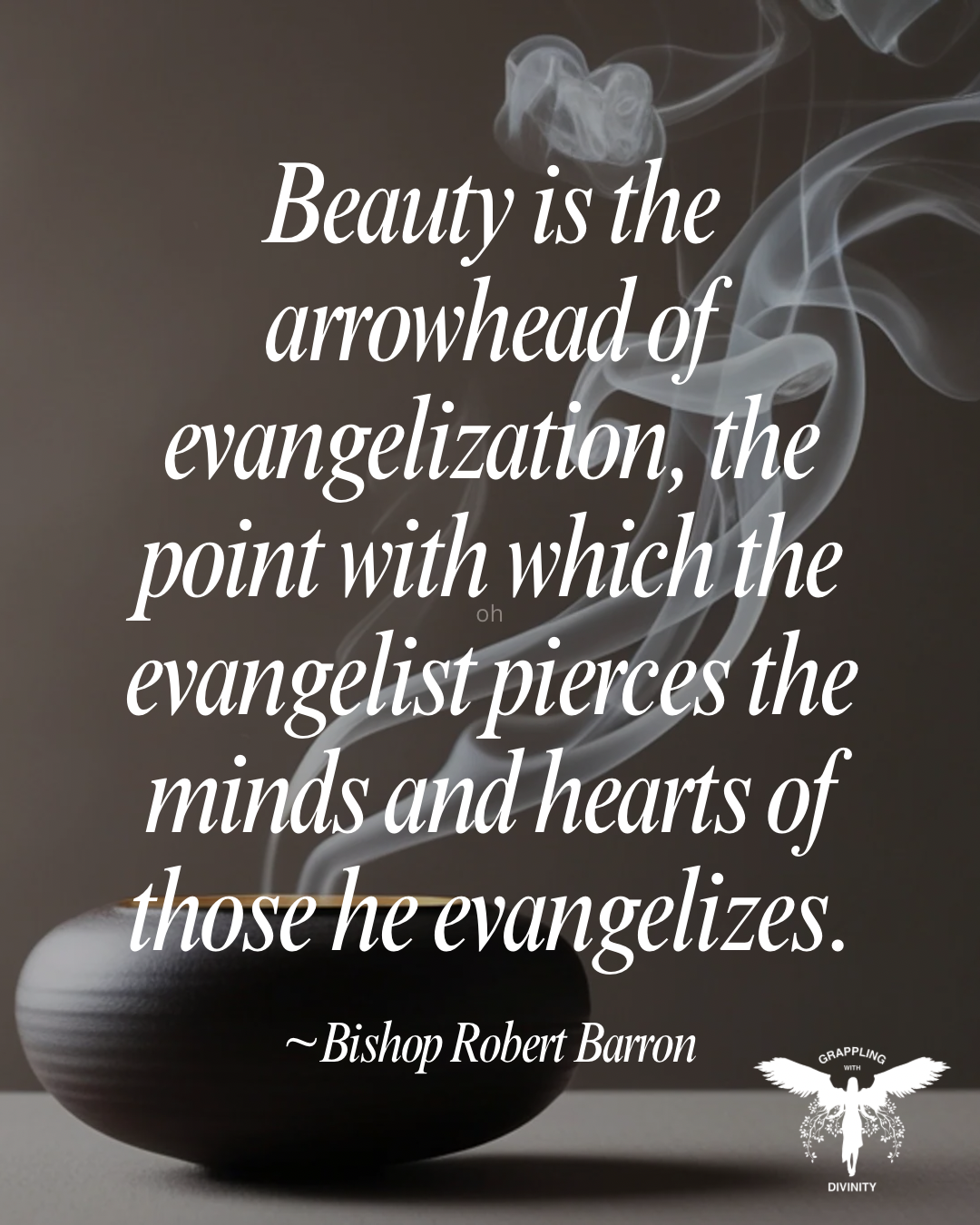
Lectio Divina: The Arrowhead Of Evangelization
Bishop Robert Barron highlights beauty as the leading edge of evangelization, capable of opening hearts and minds to the truth of the Gospel. This reflection explores how beauty draws people toward Christ by awakening desire, wonder, and receptivity before argument or doctrine ever begins.
-
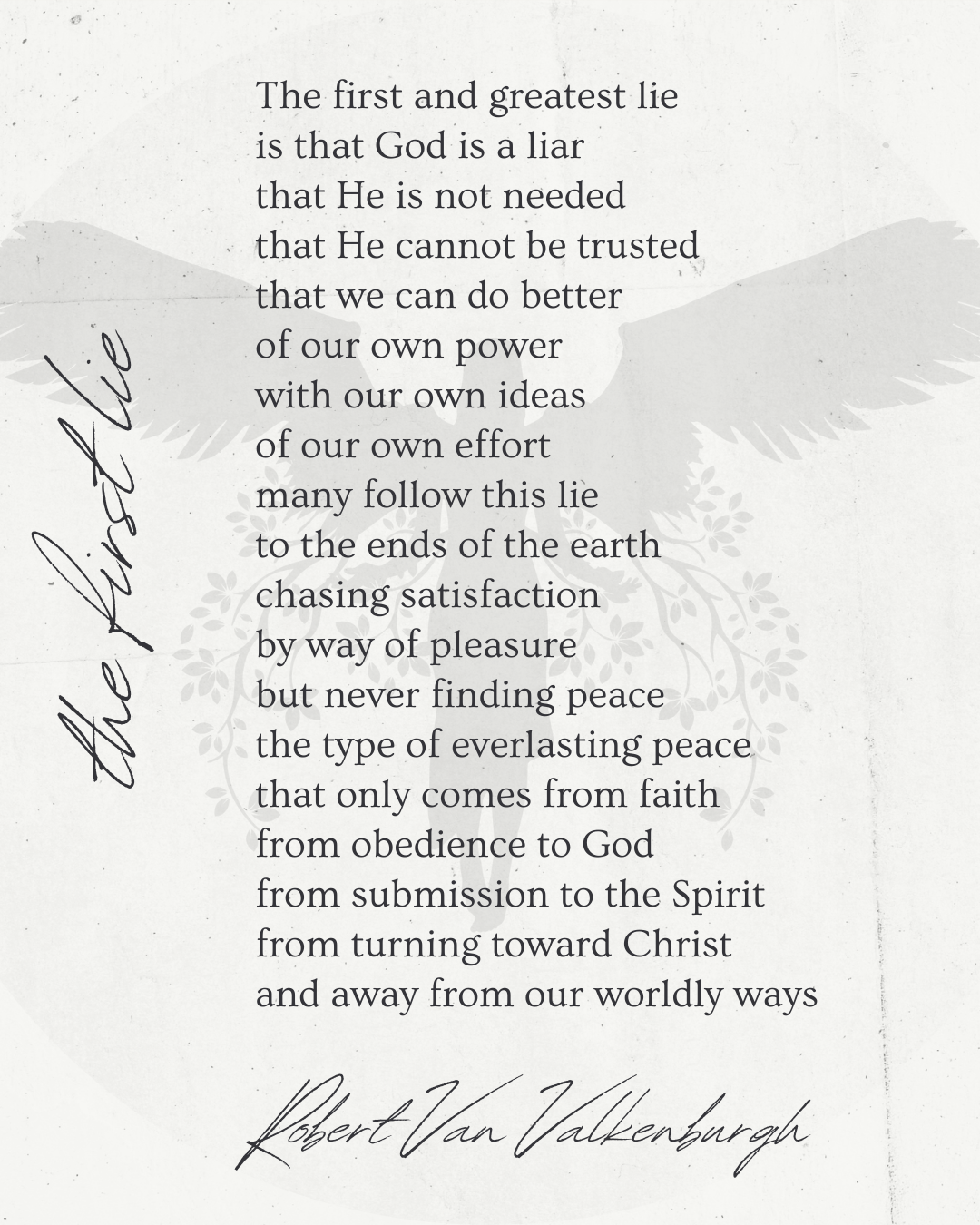
Oratio Divina: The First Lie
This reflection confronts the foundational lie that God cannot be trusted or is unnecessary, revealing how self-reliance and worldly pursuits promise satisfaction but fail to deliver lasting peace. True and everlasting peace is found not through human effort or pleasure, but through faith, obedience, and submission to God—turning away from worldly ways and toward…
-
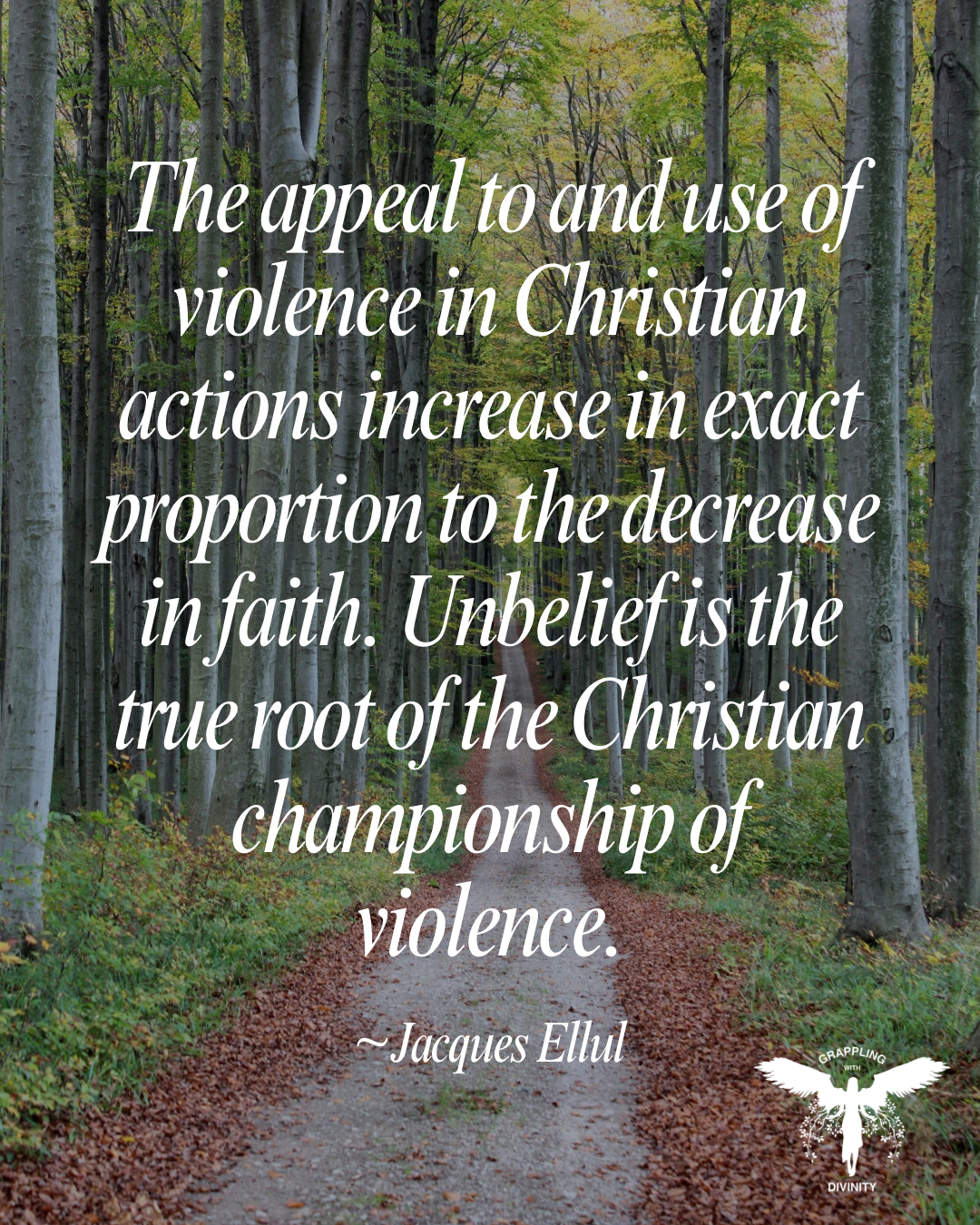
Lectio Divina: Unbelief Is The Root Of Violence
Jacques Ellul challenges Christians to examine the roots of violence, asserting that reliance on force grows where faith diminishes. This reflection highlights how authentic Christian discipleship flows from trust in God rather than coercion, calling believers back to the way of peace, humility, and faith modeled by Christ.
-

Oratio Divina: True Love
This Christ-centered poem reflects on unconditional love as the defining mark of life in Christ. It explores how enemies and suffering become teachers of divine love, revealing a spiritual rebirth in which believers die to the world and live by the boundless, eternal love of the Spirit.
-
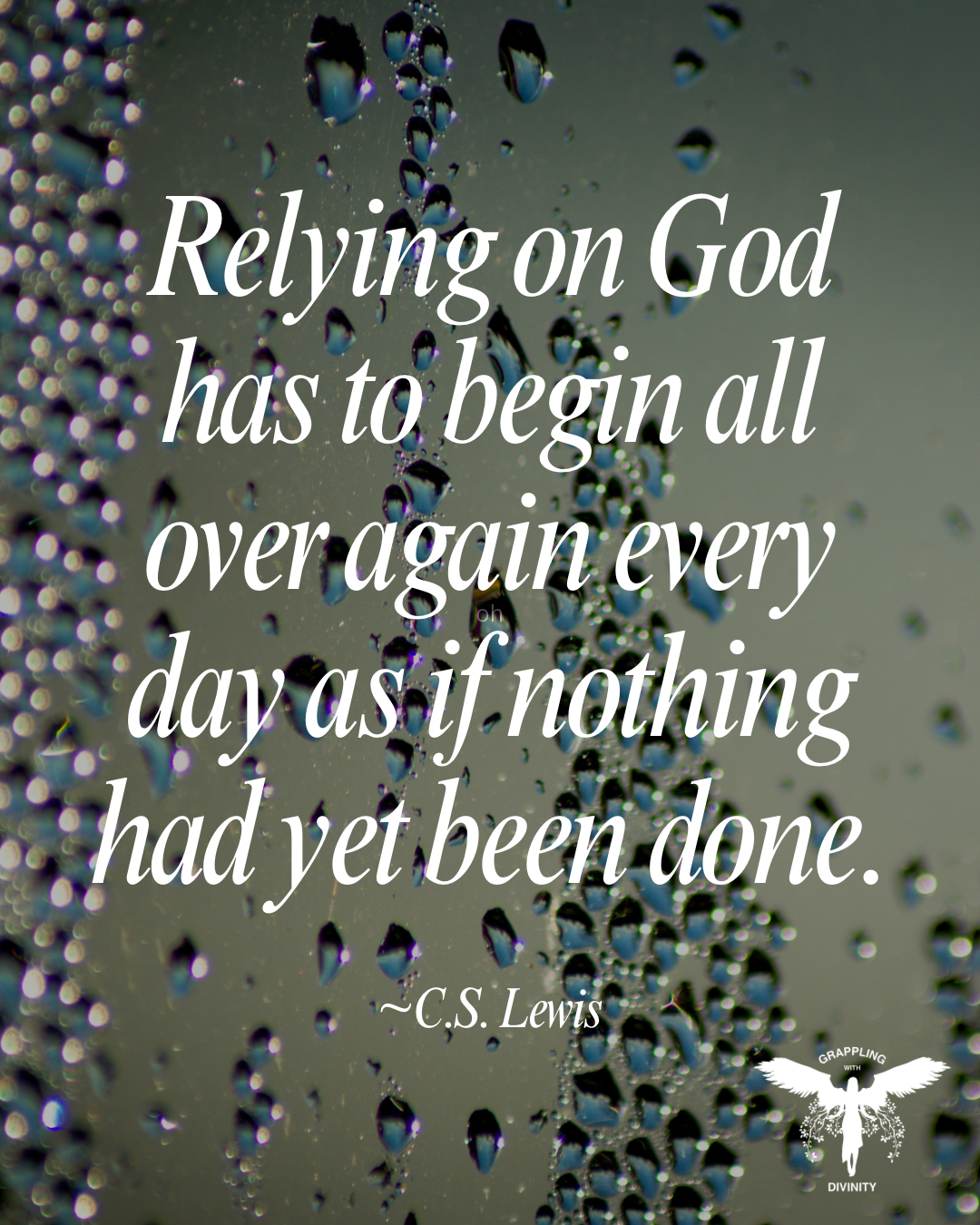
Lectio Divina: Begin Again
A concise reflection on C.S. Lewis’s reminder that trusting God is a daily, ongoing surrender. This quote invites readers to release self-reliance and begin each day anew in faith, dependence, and grace, discovering how daily trust deepens spiritual life and humility.
-

Oratio Divina: To Know Peace
A contemplative meditation on unconditional peace—an abiding, boundary-breaking peace rooted in Christ, embraced through faith, sustained by the Father’s mercy, and animated by the Holy Spirit. This reflection invites readers to consider peace not as a circumstance, but as a gift ever-present within the life of God.
-

Lectio Divina: Share Your Astonishment
Mary Oliver’s simple yet profound invitation—pay attention, be astonished, and share—captures the heart of contemplative living. This reflection highlights the spiritual practice of noticing the sacred in ordinary life, allowing wonder to awaken gratitude, and letting that wonder overflow into generous witness. It speaks to mindfulness, awe, creativity, and the call to share beauty…
-
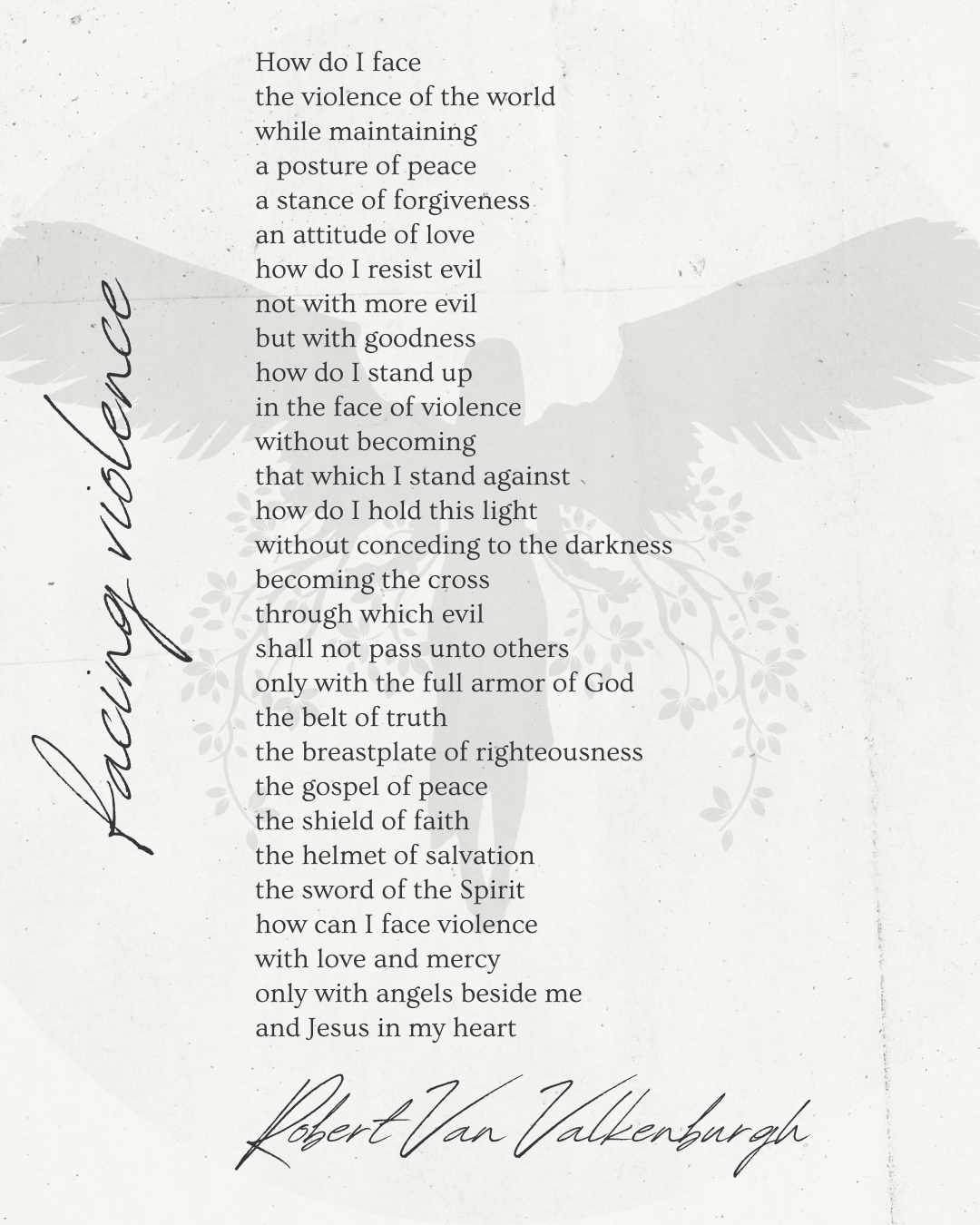
Oratio Divina: Facing Violence
A contemplative Christian poem wrestling with how to confront the violence of the world without becoming violent in spirit. Drawing on the imagery of the Armor of God, the reflection explores resisting evil through peace, forgiveness, faith, and love, embodying Christ’s light while standing firmly against darkness through mercy and truth.
-
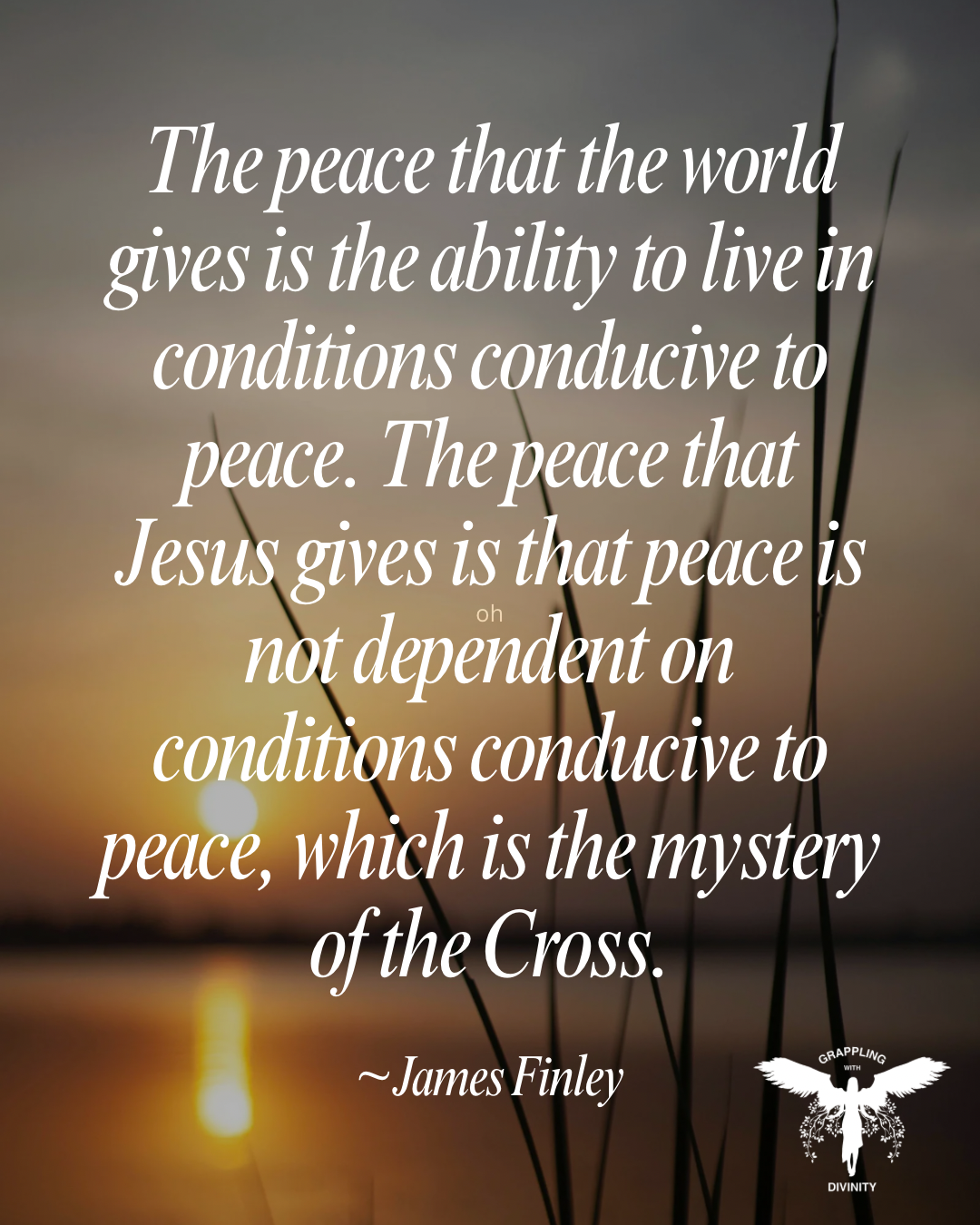
Lectio Divina: Unconditional Peace
James Finley contrasts the fragile peace offered by the world—one dependent on favorable circumstances—with the enduring peace given by Jesus, a peace rooted in the mystery of the Cross. This Christ-centered peace remains unshaken amid suffering, revealing a spiritual freedom that transcends external conditions and invites trust in God’s presence even in hardship.
-

Oratio Divina: Treasure In Heaven
This poem calls the reader to seek lasting treasure not in earthly possessions but in God alone. By turning fully to the Lord and embracing what is freely given and eternal, the soul discovers true fulfillment—riches that satisfy the deepest longings of the heart and endure beyond all that passes away.
-
No Longer Carved in Stone: Augustine of Hippo and Love as God’s One Law (Lectio Divina)
What if the law you can’t seem to keep was never meant to be kept from outside at all? Augustine insists something was written into you long before you ever tried, and failed, to obey a command pressed on you from without.
-
Even a Pin Picked Up in Love: Thérèse of Lisieux and the Little Way of Sabbath (Lectio Divina)
What if the smallest thing you do today — a pin lifted from the floor, a quiet hour handed over — carries more weight than the great things you keep waiting to do? Thérèse of Lisieux hints at a strange arithmetic of love, and this reflection sits with the Sabbath we keep so imperfectly, and…
-
The Calm We Cannot Make: St. John Chrysostom on Tears, Confession, and Peace (Lectio Divina)
What if the peace you keep trying to manufacture was never yours to make? St. John Chrysostom describes the calm that follows tears the way a violent storm gives way to stillness, and this reflection sits with the ache of falling short of the peace Christ asks us to carry — and the distance between…
