Lectio:

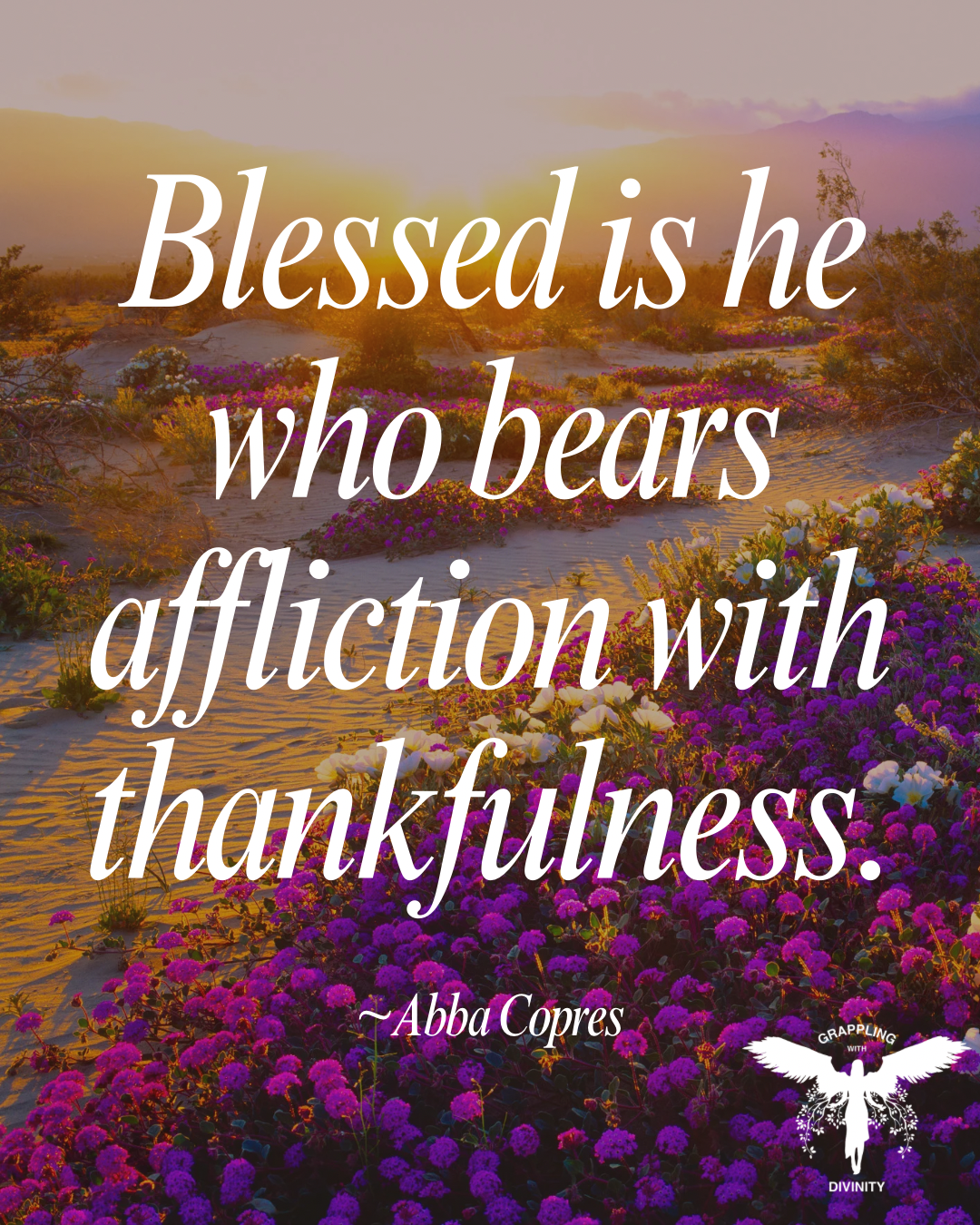
“Blessed is he who bears affliction with thankfulness.”
— Abba Copres, Sayings of the Desert Fathers
Meditatio:
It is easy to trust God when we like what is happening in our lives. In fact, it is just as easy to forget Him when all is going well—when we are comfortable, content, and enjoying ourselves.
When we face difficulty, however—when obstacles arise in our path, when we meet resistance, or when tragedy strikes—we begin to question God and even to lose faith (James 1:2–4).
God is love, and God is good (1 John 4:8). So this thing that is causing us pain, grief, or sorrow cannot be from God. And perhaps this is true. Perhaps God does not create the circumstances that wound us. Perhaps they are the result of a broken world or of our own sin. Adam’s sin—not God—brought death and suffering into the world (Romans 5:12).
But we see in the story of Job that, while God may not directly cause our suffering, He sometimes allows it. And like Job, no matter how righteous we are, and no matter how persistently we question Him, we may not receive the answers we are seeking—if we receive answers at all (Job 38:1–4).
So, in our search for a cause for our pain and for neatly packaged answers, we blame God. We blame others. We blame the hardness of our own hearts. But no amount of blaming brings peace. No amount of finger-pointing or rationalizing eases anxiety or quiets frustration. If anything, it only deepens them.
But what if all of this truly is within God’s providence? What if the very things we perceive as happening to us are, in fact, happening for us (Romans 8:28)? What if even the experiences we find most troublesome, objectionable, or intolerable are the enfolded love of God unfolding itself in and as our very lives in ways we simply do not yet understand?
What if, like Job, God’s answer to us is simply: “It is not for you to understand. You are not Me”? Then our faith will truly be tested. Then we will discover the kind of soil our faith has been sown into—whether it withers in the heat of cynicism, is choked by the thorns of anxiety and resentment, or sinks its roots deep into love and endures.
Oratio:
Love, allow me
to allow love
to move through me,
opening the closed spaces,
revealing all that is hidden,
softening the hard edges,
peeling away the layers
of false understanding,
false identity,
and false worship,
healing all that is broken,
or using that brokenness
to love’s purpose,
until all that is left of me
is the love
that allows me
to allow others
to be loved,
as love has allowed
me to be loved
by Love.

Contemplatio:
When you find yourself in the middle of pain or confusion, can you hold even the smallest thread of gratitude — not for the suffering itself, but for the One who walks through it with you — and what might shift in you if you could?
Related Scripture:
“Not only that, but we also glory in our sufferings, because we know that suffering produces perseverance; perseverance, character; and character, hope.”
— Romans 5:3–4
For Further Reading:
If you enjoyed this post, you may also like Softened Hearts Through Suffering and Grace (Lectio Divina)
~Robert Van Valkenburgh
Grappling With Divinity.
Wrestling With God.
Returning To Love.
Leave a Reply