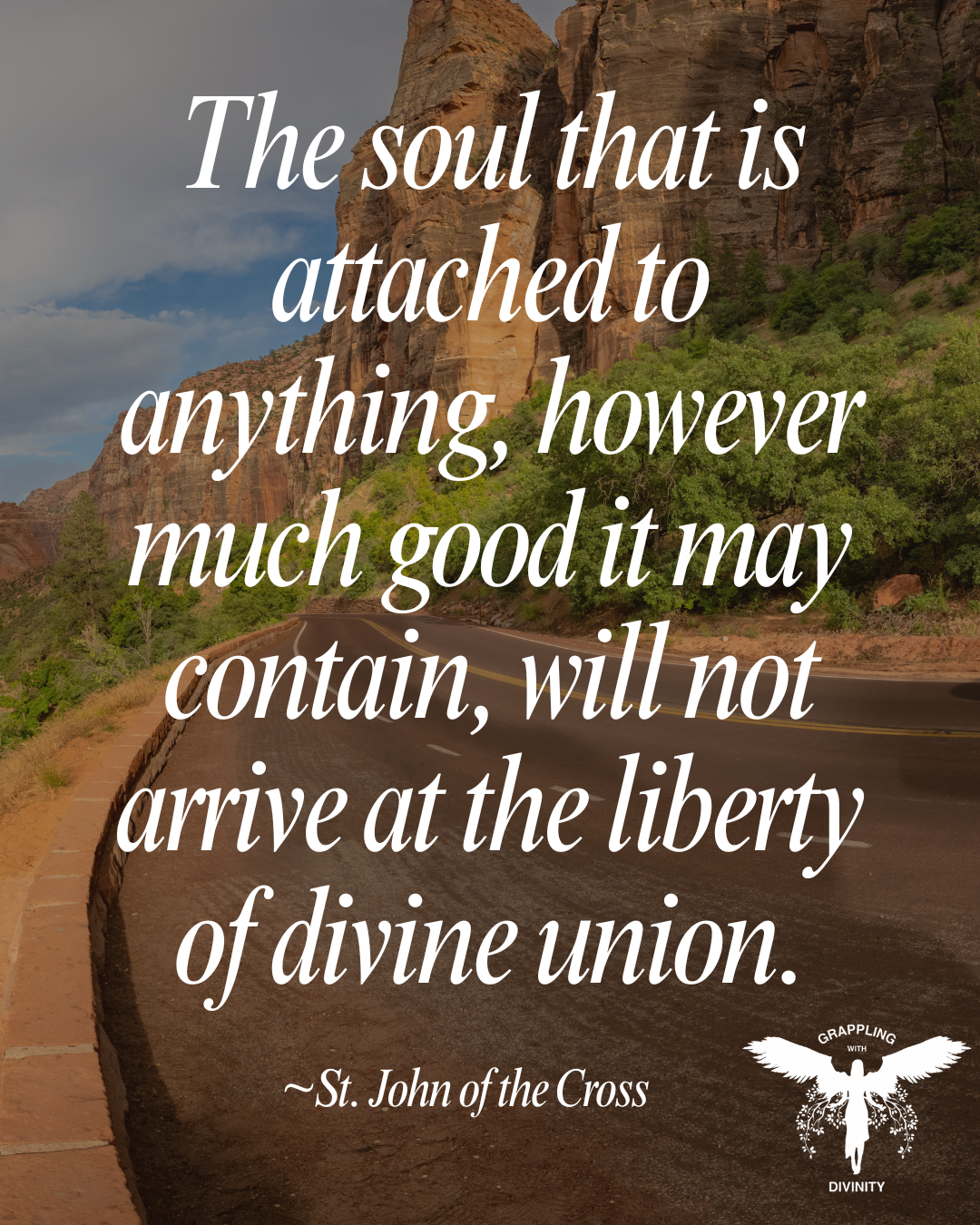
“The soul that is attached to anything, however much good it may contain, will not arrive at the liberty of divine union.”
~St. John of the Cross
Reflection:
In this passage from St. John of the Cross’sThe Ascent of Mount Carmel, the great Spanish mystic leads us into divine union with God by letting go of our attachments, even our attachments to God, or at least our attachments to our concept of God. That is, if we want to experience perfect union with perfect God, we must become detached from all beliefs, opinions, and expectations that are not-God. For the mystics, even our understanding of God is a hindrance to our experience of God. As German mystic Meister Eckhart said, “I pray to God to rid me of God.”
This may be the hidden sentiment in St. Paul’s declaration to the Ephesians that they are unified with God, or saved, by grace, and not by their own effort, either in action or thought (Ephesians 2:8-9). In other words, we can neither think our way nor work our way to God. We can only receive him. This means we must be willing to let go of all that is not God, even our beliefs about God. We are the recipients of grace, after all, not the creators of it, and grace is most greatly hindered by the pride, prejudice, and presumption that prevent us from letting God be God and nothing or no one else.
Question for Meditation:
What inner belief or attachment am I holding onto that keeps me from fully receiving God’s grace?
Related Scripture:
“Set your minds on things that are above, not on things that are on earth.” — Colossians 3:2 (ESV)
For Further Reading:
If you enjoyed this post, check out When God Feels Near and Far: Embracing the Felt Presence and Perceived Absence of God’s Love (Oratio Divina) that explores the mystery of God’s unseen presence and how surrendering our expectations and efforts opens us to God’s love beyond human understanding, resonating with themes of detachment and grace.


Leave a Reply