



Latest Thoughts
Explore My Reflections
Following the contemplative rhythm of Lectio Divina
Moving from Attentive Reading (Lectio)
To Reflection (Meditatio)
To Prayerful Response (Oratio)
And finally into Silent Resting in God (Contemplatio)
Grappling With Divinity invites a slow unfolding of Scripture, Spiritual Wisdom, and Lived Experience.
-

An Open Invitation To God’s Banquet (Lectio Divina)
Drawing on Richard Rohr’s image of Christianity as a wedding banquet rather than a judicial court, this Lectio Divina reflects on God’s original intention of inclusion — and on how it is we, not God, who exile ourselves from the table that has always been set for us.
-

Peace Be With You, Wounds and All (Lectio Divina)
Drawing on Bishop Robert Barron’s reflection on the wounds and Shalom of the risen Christ, this Lectio Divina explores how new life proceeds not from healing but from forgiveness — and how we are called to walk into the world wounded and glorified, offering peace to all, especially to those who gave us our…
-

A Life Dedicated to the Lord: Sabbath, Surrender, and the Little Way (Lectio Divina)
Drawing on Thérèse of Lisieux’s insight that God asks only for surrender and gratitude, this Lectio Divina explores what it means to practice Sabbath not as a single day but as a disposition of the whole life — a perpetual yes to God’s love, learned slowly, in faith and through grace.
-
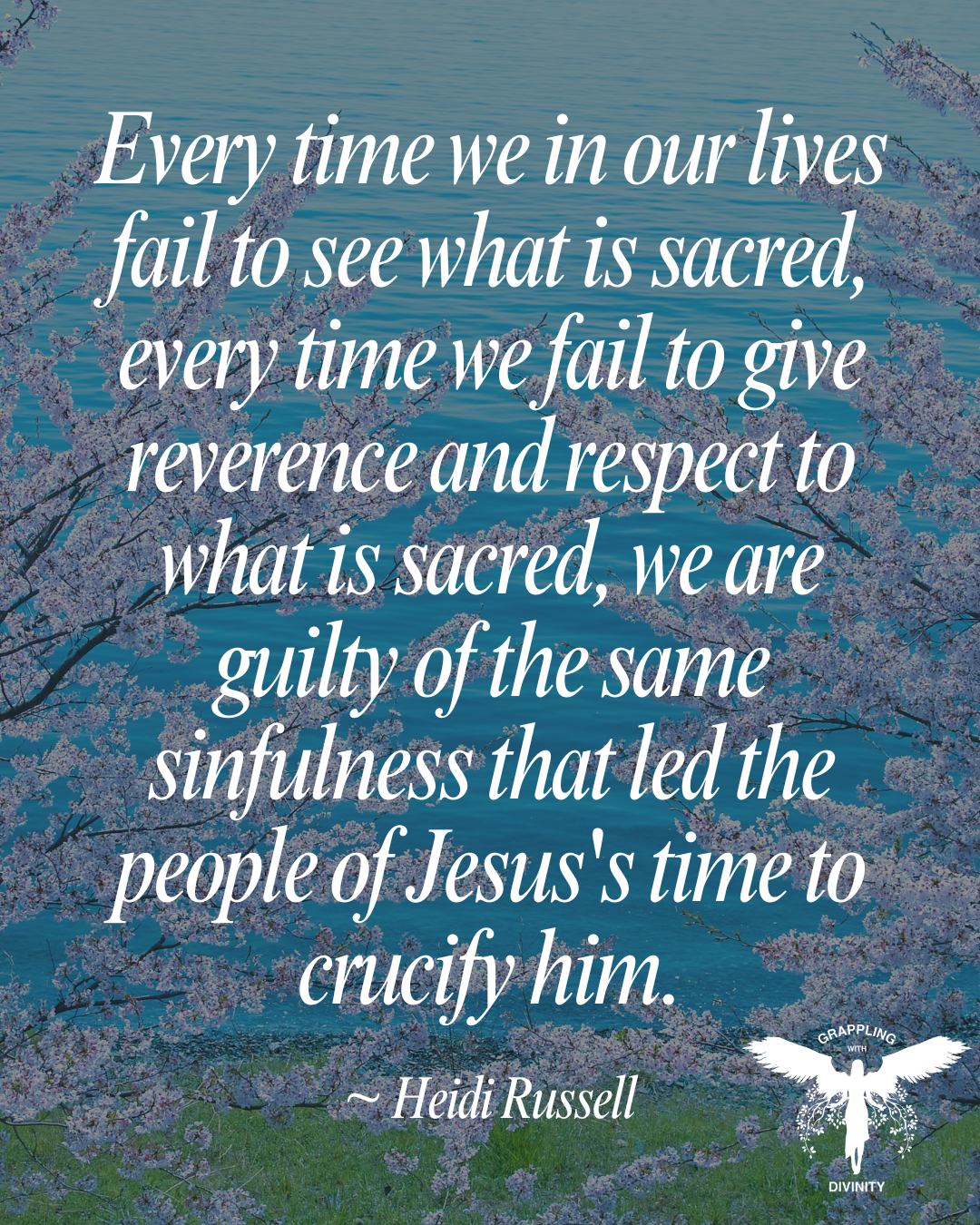
Where Does A Tree Start And End: God’s Eternal Love As The Ground Of Existence (Lectio Divina)
Drawing on Heidi Russell’s Rahnerian Christology, this Lectio Divina traces the cosmic arc of God’s self-communication — from the eternal intention to take on flesh, through the incarnation of Jesus of Nazareth, to the crucifixion we repeat whenever we fail to see the sacred ground of our shared existence. Beginning with a meditation on…
-
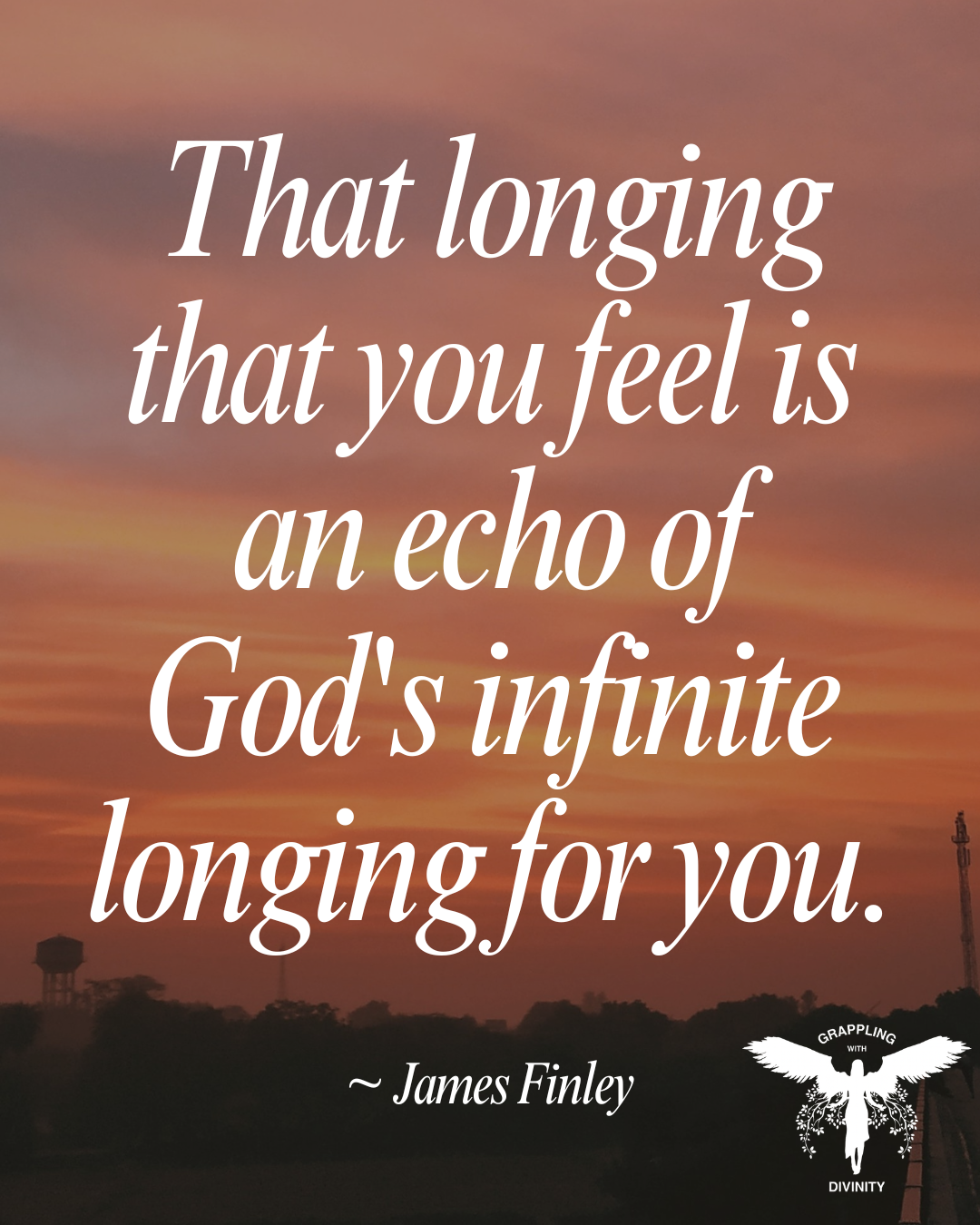
The Cry From The Cross: God Longs for Us as We Long for God (Lectio Divina)
A Lectio Divina reflection on the cry of desolation — drawing on James Finley’s insight that our longing for God is an echo of God’s infinite longing for us. Meditating on Christ’s cry from the cross as an act of divine solidarity, this post traces God’s pursuit of humanity through all of history and…
-

The Still Small Voice and Korean Stew (Lectio Divina)
A Lectio Divina reflection on anxiety, identity, and transformation — drawn from a traffic jam on I-495, a podcast about Bonaventure, and a bowl of Korean stew. Drawing on Bonaventure’s Soul’s Journey into God, this post explores what it means when God refuses to take us back to who we once were, and why…
-

Anywhere But Here: Finding God in the Mundane (Lectio Divina)
In the mundane routines of daily life — the dishes, the laundry, the difficult conversation — God is not absent but present, nearer to us than we are to ourselves. Drawing on the Scotist vision of a God who creates out of love in order to love, this reflection invites us to stop waiting…
-
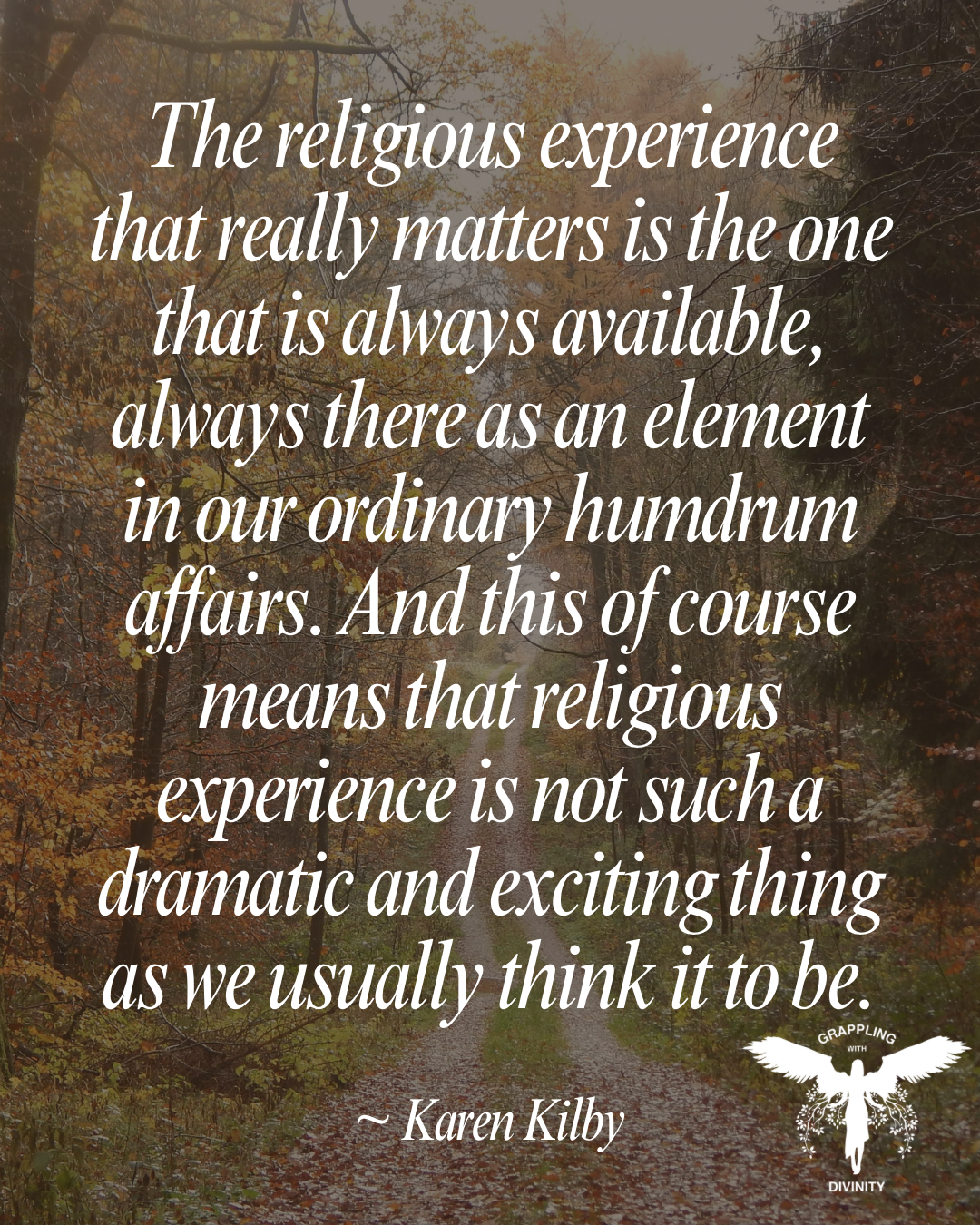
No Secular Moment: Karl Rahner and the Sacredness of Ordinary Experience (Lectio Divina)
Drawing on Karen Kilby’s introduction to Karl Rahner, this Lectio Divina explores why there is no such thing as a secular or ordinary experience — why every moment, every relationship, and even our brokenness has its origin in God’s loving self-communication, poured out as the very life we so often take for granted.
-
The Ledges We Cling To And The Holy Longing That Will Not Let Us Go (Lectio Divina)
What do a drug addict’s first high, an alcoholic’s first drunk, and the soul’s restless searching have in common? They are all, in their own way, an answer to the call of holy longing — a longing that God placed in us before we knew we had it. Drawing on Karl Rahner’s theology of…
-

The Unending End: On Love, Resurrection, and the Life That Awaits Us (Lectio Divina)
Drawing on Augustine’s vision of eternal life in the City of God, this Easter Sunday Lectio Divina explores what it means that true love is not transactional but transformative — that what we give in love is given back more perfectly in the resurrection, body and spirit made new, even with the wounds this…
-
No Longer Carved in Stone: Augustine of Hippo and Love as God’s One Law (Lectio Divina)
What if the law you can’t seem to keep was never meant to be kept from outside at all? Augustine insists something was written into you long before you ever tried, and failed, to obey a command pressed on you from without.
-
Even a Pin Picked Up in Love: Thérèse of Lisieux and the Little Way of Sabbath (Lectio Divina)
What if the smallest thing you do today — a pin lifted from the floor, a quiet hour handed over — carries more weight than the great things you keep waiting to do? Thérèse of Lisieux hints at a strange arithmetic of love, and this reflection sits with the Sabbath we keep so imperfectly, and…
-
The Calm We Cannot Make: St. John Chrysostom on Tears, Confession, and Peace (Lectio Divina)
What if the peace you keep trying to manufacture was never yours to make? St. John Chrysostom describes the calm that follows tears the way a violent storm gives way to stillness, and this reflection sits with the ache of falling short of the peace Christ asks us to carry — and the distance between…
