Lectio

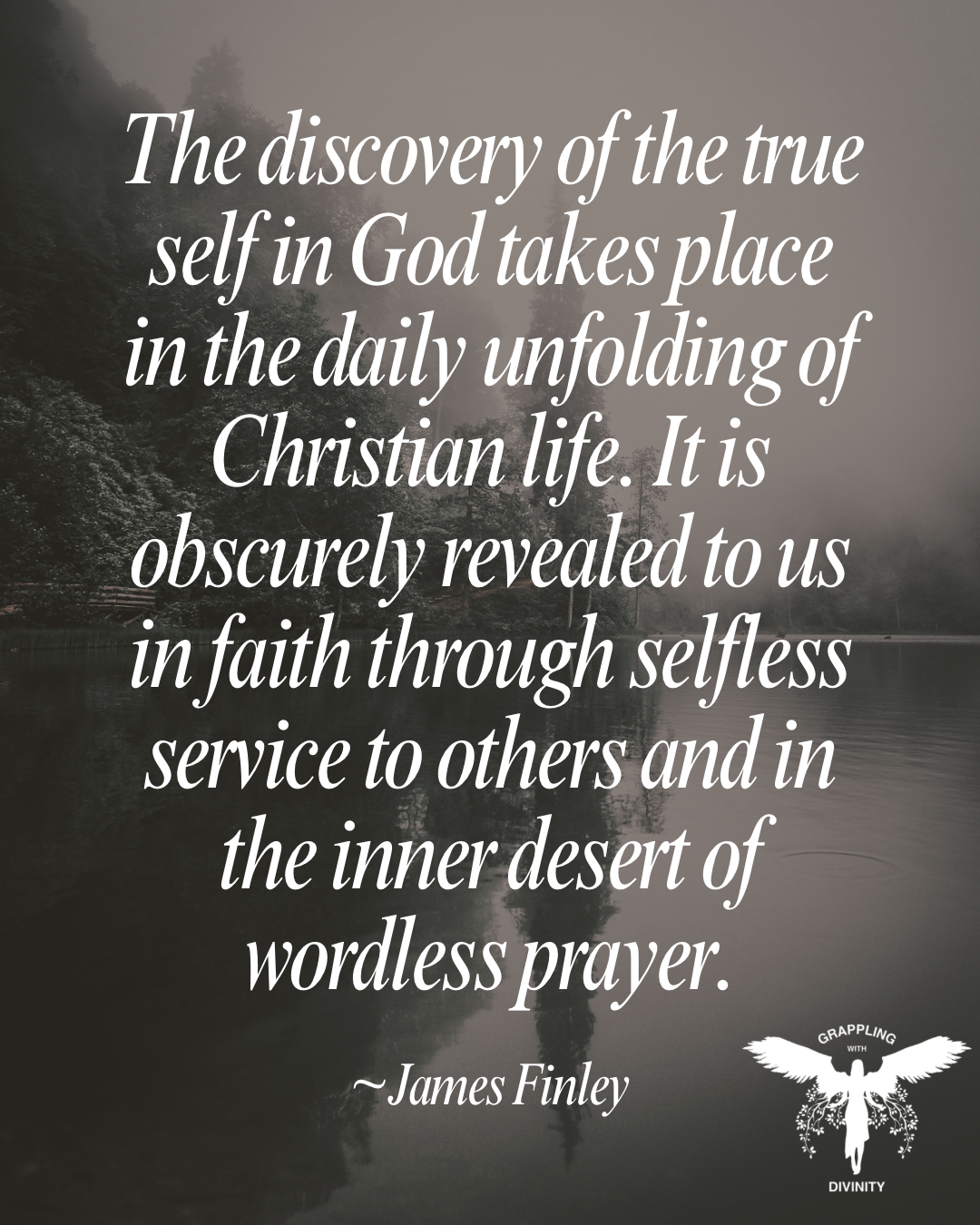
“The discovery of the true self in God takes place in the daily unfolding of Christian life. It is obscurely revealed to us in faith through selfless service to others and in the inner desert of wordless prayer.”
— James Finley, Merton’s Palace of Nowhere
Meditatio
The false self knows nothing of the true self because the true self cannot be seen or understood through the false self’s lens. The false self has no reference point from which to understand the true self because the false self is everything the true self is not, and nothing of what the true self is. And so the false self experiences the true self as threat, as enemy, and as the alien other to be avoided, shunned, and destroyed.
This is why the false self manifests as accuser, persecutor, and oppressor. The false self’s attributes are pride, greed, lust, envy, gluttony, wrath, and sloth, all justified as essential, as necessary, and as the basis for survival. And this is true, in the sense that, without the self-destructively disproportionate exaggerations of these God-given instincts turned into brokenness, the false self would cease to be.
The true self knows the false self all too well because it resides beneath it, always present in all of the false self’s whims and wants, comings and goings, and hopes and fears. The ways of the false self are immediately recognizable to the true self because they are the ways of exile, of isolation, and of not-love, the shadows that have covered the true self’s light for far too long.
Paul names this directly. “You were taught to put away your former way of life, your old self, corrupt and deluded by its lusts, and to be renewed in the spirit of your minds, and to clothe yourselves with the new self, created according to the likeness of God in true righteousness and holiness” (Ephesians 4:22–24). The old self is put away. The new self is put on — or rather is revealed in Christ, as Christ. This is precisely the movement that grace makes possible and which contemplative prayer opens us up to receive.
We do not build the true self. We do not even uncover it. Grace does that work. Love does that work. We are merely consenting witnesses to the transfiguration happening within us through the work of the Holy Spirit, through Christ, on behalf of the loving God who, when we are willing to shed the false self that causes us and those around us to suffer so that the true self may be revealed beneath, draws us back into divine relationship, from truth to Truth.
Oratio

from beneath the shadows
your light is revealed
layer upon layer
peeled away
like shedding skin
new life emerges
love emerges
the yes of Christ
rescues me
what remains is love
unburdened
free
Contemplatio
What parts of the false self do you cling to for fear of losing your identity if you let them go?
Related Scripture
“We know that our old self was crucified with him so that the body of sin might be destroyed, and we might no longer be enslaved to sin.” — Romans 6:6 (NRSVCE)
For Further Reading
If you enjoyed this post, you may also like The Ledges We Cling To And The Holy Longing That Will Not Let Us Go, which explores how the false self grasps at substitutes for God — and how the holy longing beneath our clinging is, in fact, the very movement of grace drawing us home.
Robert Van Valkenburgh
Grappling With Divinity.
Wrestling With God.
Returning To Love.
Leave a Reply